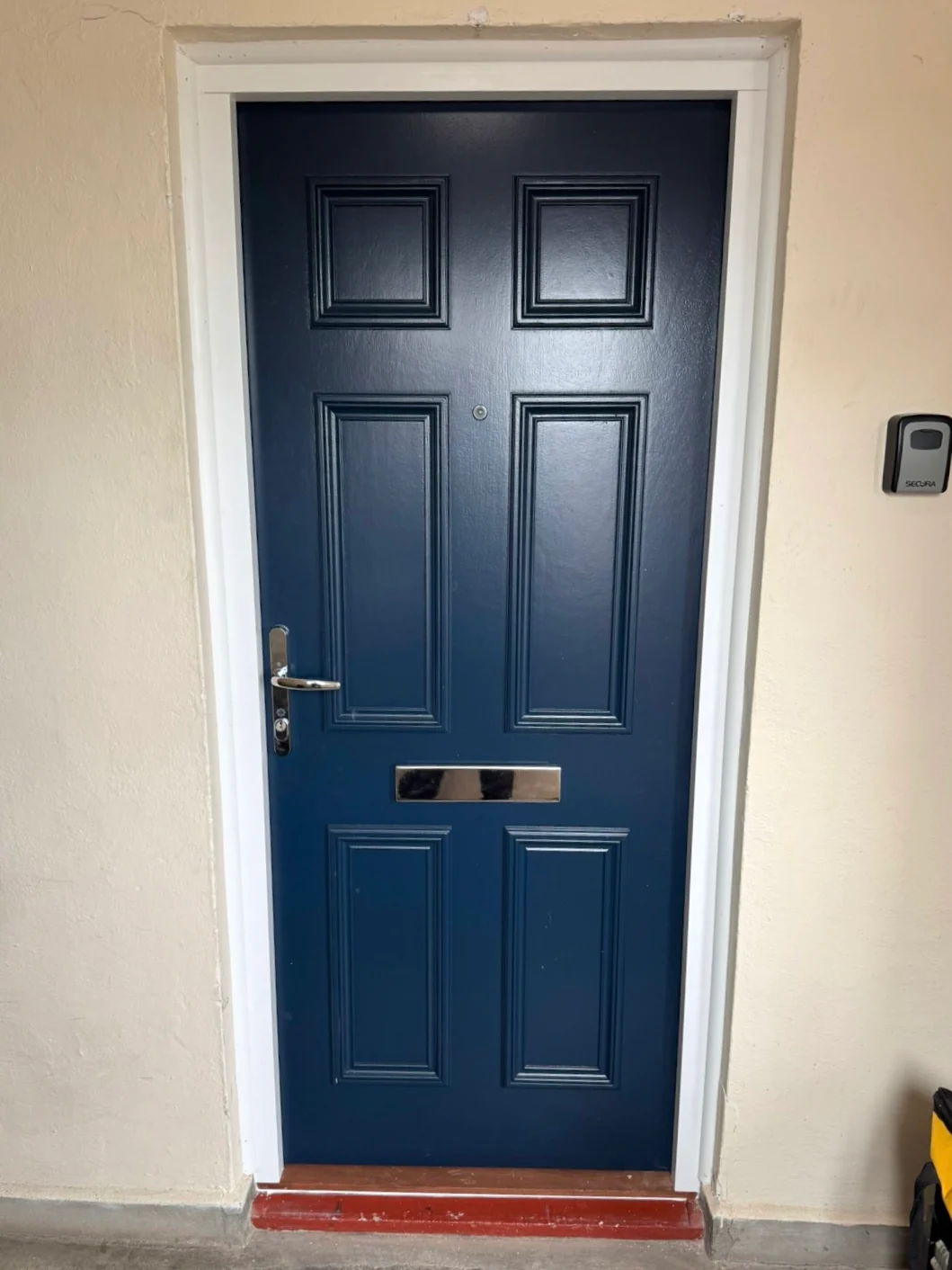
01 / PROPERTY TYPES
Practical support for a home or residential building
Residential customers often start with a visible concern, a refurbishment plan or a request from a managing agent. Tell us what prompted the enquiry and where the door is situated. A door within a house, a flat entrance and a door in a shared residential corridor should not be treated as the same application without looking at the building requirements.
You do not need to choose the final product before speaking to us. Photos and a description can help explain the opening, while existing reports and specifications provide important context. Our supply and installation service considers the proposed door and fitting together. Where the condition of an existing door is uncertain, an inspection enquiry may be a better starting point.
02 / PROPERTY TYPES
Balance appearance with an understood specification
A new door should be discussed in terms of both its appearance and its supported arrangement. Explain the finish you prefer and any glazing, locks or other features you want considered. Those choices cannot be separated from the product requirements. Retaining an old frame or transferring hardware from the previous door needs assessment rather than an assumption that matching dimensions are sufficient.
For a flat, find out whether the managing agent has issued instructions and who can approve the work. For a house, share the relevant project specification where there is one. Access, the use of surrounding rooms and arrangements with occupants should also be discussed. Clear information helps the proposal reflect the actual household and opening.
03 / PROPERTY TYPES
For homes and flat entrances
For a home, explain where the door is situated, what is changing and whether the work forms part of a larger refurbishment. Approximate dimensions and pictures of both sides of the opening may help an initial discussion. Any choice about style, glazing or hardware still needs to be considered within the requirements of the proposed door arrangement.
For a flat entrance or a shared residential building, check who can approve the work and whether the managing agent has issued a specification. Do not assume that ownership of a flat automatically resolves permission for every alteration. Send the relevant instructions with your enquiry. This helps align the proposed service with the information already held by the building’s management.
04 / PROPERTY TYPES
Think about the complete doorset
The visible door leaf is only part of the arrangement. The frame, glazing, seals, hardware and installation details all need to be considered together. A component that fits physically is not automatically an appropriate substitute. Similarly, a visually matching replacement may have different supporting requirements. Product decisions should reflect the intended location and the information available for the system.
Existing openings need particular care where some components are proposed for retention. A frame should not be assumed suitable simply because it appears undamaged in a photograph. Share what is known about the existing door and the surrounding construction. Resolving uncertainty before ordering helps avoid a proposal based only on dimensions, appearance or a generic product description.
05 / PROPERTY TYPES
Plan access around the people using the building
Occupied properties need practical coordination. Explain how the team will enter, where materials can be brought in and whether reception, a concierge or an occupier needs to be present. Tell us about stairs, lifts and any restrictions on loading or working hours. These details are particularly useful when several openings are spread over different floors or when individual appointments are needed.
A proposed programme depends on the agreed work, access and, for installation, the specification and availability of products. Share your preferred timeframe and any fixed project milestones, but do not treat a date as confirmed before arrangements are agreed. If access changes, communicate that early. The work records should distinguish what was completed from any door that could not be accessed.
06 / PROPERTY TYPES
Agree the scope before work starts
A clear quotation should identify the openings and the service being requested. Establish whether the task is inspection, combined supply and installation, or maintenance of existing doors. These activities have different purposes and should not be treated as interchangeable. If an assessment identifies additional information or a revised proposal, that needs to be discussed before assuming that the original scope remains appropriate.
For a managed building, identify the person who can authorise the work and receive the documentation. Occupiers, property owners and managing agents may each have a role in arranging access or approving changes. Provide any building-wide specification at the outset so that the proposal is considered against the actual requirements. A convenient date or preferred finish should not replace this preparation.
07 / PROPERTY TYPES
Consider the door throughout its working life
A door needs appropriate attention after installation. Daily use, accidental damage and later alterations can affect its operation. Report a change such as sticking, unreliable closing, loose hardware or damaged seals through the building’s agreed process. Avoid changing parts or adjusting the door merely to hide a symptom. The cause and the requirements of the existing arrangement need consideration.
New floor finishes, access-control changes or replacement ironmongery can also affect an opening. Keep supporting information available for anyone proposing alterations. If you are uncertain about the condition of existing doors, discuss inspection first. If defects have already been identified, provide the findings with a maintenance enquiry so that the proposed response can be considered in context.
08 / PROPERTY TYPES
Request a free quotation
Contact us with the details of your property and a short explanation of the outcome you need. If you are comparing quotations, make sure each relates to the same openings, product requirements and work. Ask what is included, what depends on further assessment and what documentation is expected. A total price is easier to understand when the underlying scope is clear.
Our services are fire door inspection, fire door supply and installation, and fire door maintenance. We do not provide a supply-only service. If you are unsure which service applies, choose Other / Need Advice when enquiring or call the team. Explain the situation in your own words and we can help clarify what information is needed next.
PRACTICAL ANSWERS
Your questions answered
How do I get a quotation?
Contact us with your postcode, door count and a description of the work. Include any specification or inspection findings you already hold, and tell us your preferred timeframe.
Can I ask for advice before choosing a service?
Yes. Explain the issue or planned project and we can discuss whether inspection, supply and installation, or maintenance is the appropriate starting point.