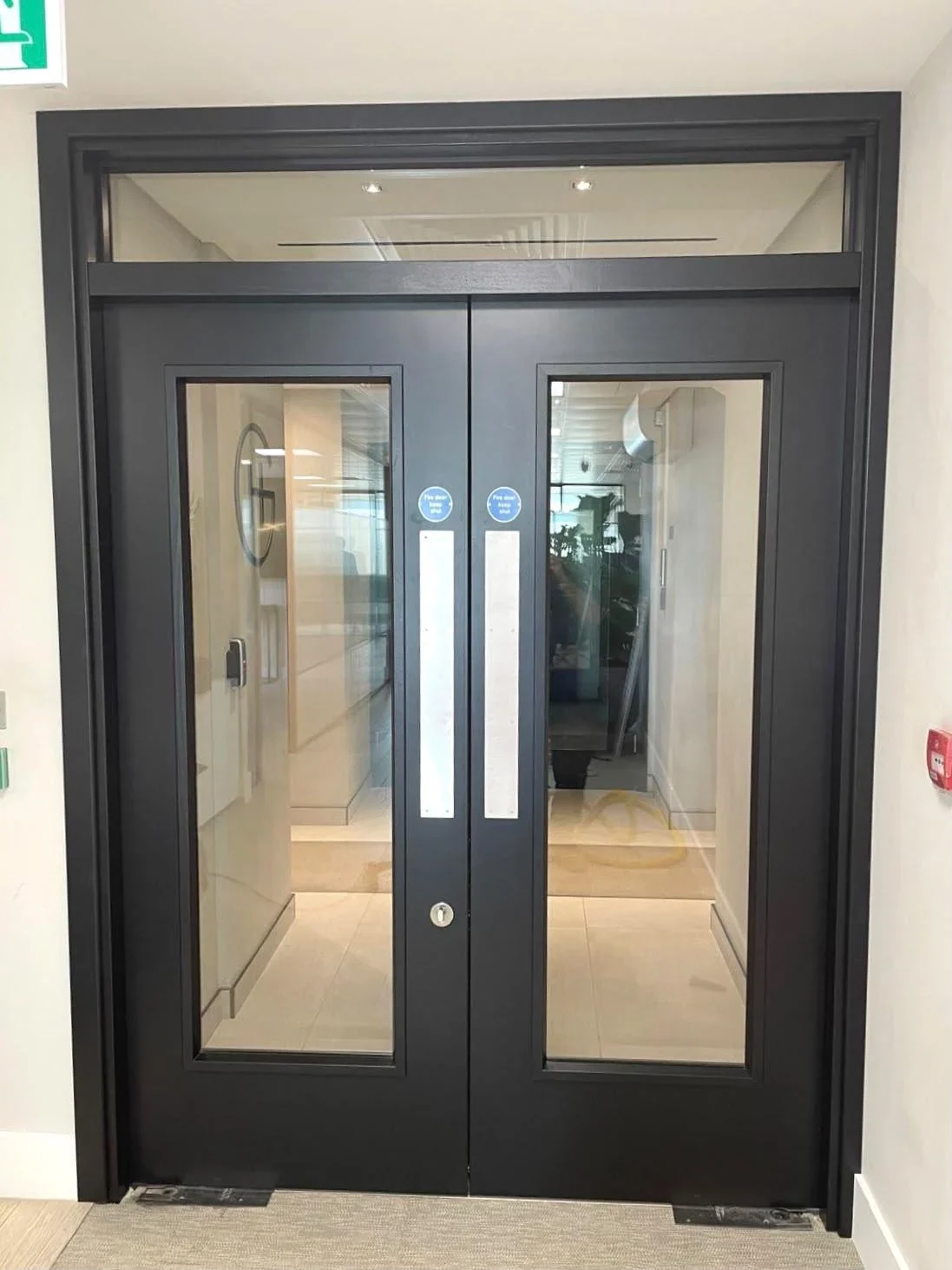
01 / INSPECTION GUIDE
Start by defining the question
A useful inspection starts with a clear reason for the visit. Perhaps a door catches on the floor, a report has raised concerns, or a managing agent needs a structured record of several openings. Describe the situation before booking. An enquiry for one flat entrance is different from a survey covering communal corridors, plant rooms and doors across several occupied floors.
Write down what you need to receive afterwards. This might include a door-by-door record, photographs of findings, an explanation of limitations and recommendations for further action. Agree the inspection scope and any exclusions in advance. The word inspection should not leave either party guessing about which doors will be examined or which questions the visit is intended to answer.
02 / INSPECTION GUIDE
Understand routine checks and specialist assessment
Government guidance for England distinguishes basic routine checks under Regulation 10 from assessment of whether doors provide suitable fire protection. These routine checks are not automatically a specialist service. For relevant blocks with a top storey above 11 metres, communal doors require checks at least every three months, and best endeavours must be used to check flat entrance doors at least annually. The guidance linked below explains the scope.
When asking for a quotation, describe the service you actually need rather than selecting a frequency from another building's schedule. A professional inspection can address a particular concern or provide a more detailed record within an agreed scope. It does not replace the building's fire risk assessment or settle every question about the wider premises.
03 / INSPECTION GUIDE
Prepare a door schedule and available records
Give each opening a reference that someone else can locate. For example, a floor, corridor and door number are more useful than a description such as the brown door. If an existing report already uses identifiers, retain them. Changing references between the report, quotation and visit creates unnecessary uncertainty about which findings belong to which opening.
Gather previous reports, installation information and relevant specifications before the appointment. Include any history of damage, alterations or recurring operational problems. You do not need to create missing technical documents yourself. Explain what is available and what is unknown, so the person carrying out the inspection can identify where the available evidence may limit the conclusions.
04 / INSPECTION GUIDE
Make access practical
Confirm who will meet the inspector, which areas are occupied and whether keys or escorts are needed. For flat entrances, arrange the necessary access with residents through the appropriate management contact. A schedule can look complete on paper while several doors remain inaccessible on the day. Discuss how missed access will be recorded and whether a return visit would be separately arranged.
Mention restricted working hours, security procedures and any other activities taking place in the same corridors. Where several organisations share a building, identify one contact who can resolve access questions. Planning this before arrival makes better use of the appointment and reduces the chance of an incomplete survey being mistaken for a complete building-wide inspection.
05 / INSPECTION GUIDE
What the inspection may examine
The agreed inspection may consider the visible condition of the door leaf and frame, glazing, seals, hardware, gaps and operation, alongside available identification and product information. The BWF Fire Door Alliance explains why inspection and maintenance concern the complete arrangement. The actual scope should be confirmed with your inspector, including whether any concealed details are outside the visit.
Tell the inspector about intermittent behaviour that might not happen during a short appointment. A door may behave differently at busy periods or after another part of the building has been altered. Describe what you observe without attempting to dismantle or modify the door to demonstrate it. Photographs can support the discussion, but they cannot prove all aspects of installed fire performance.
06 / INSPECTION GUIDE
Read the findings as an action document
When the report arrives, check that the door references match the schedule and that any inaccessible openings are clearly identified. Findings should be understandable to the person arranging the next step. If wording is unclear, ask what observation led to the recommendation and what additional evidence or assessment is needed before a repair or replacement decision can be made.
Separate completed inspections from recommended work. Receiving a report does not mean a defect has been repaired. Assign responsibility for arranging follow-up, note any priorities stated by the inspector, and keep outstanding actions visible. Where a concern needs prompt attention, discuss it with the person responsible for fire safety rather than waiting for a convenient future refurbishment date.
07 / INSPECTION GUIDE
Move from report to a properly scoped quotation
Send the relevant findings when requesting remedial work. Keep the original identifiers and make clear whether you want a price for all recommendations or a defined subset. Ask whether the proposed next step is maintenance, further assessment or replacement. A quotation should make its assumptions visible so you can compare the work being offered, not simply the total price.
TEK Fire Doors provides inspection, supply and installation, and maintenance. To discuss an inspection, send your postcode, approximate door count, building type and reason for enquiring. Tell us about any existing report and your preferred timeframe. We can then discuss the appropriate scope and the information needed for a free quotation.
PRACTICAL ANSWERS
Your questions answered
Can you inspect just one door?
You can enquire about a single door. Explain its location, the concern and the records available so the scope can be discussed.
Does an inspection include repairs?
Only where repair work has been explicitly agreed. Confirm what the quotation includes and how any additional findings will be handled.
Can you certify a door from photographs?
Photographs help explain an enquiry, but they do not establish the full installed performance of a door or reveal concealed details.